
On a beauty instrument or a handheld medical device, the enclosure is not packaging — it is the product. Buyers judge it by colour uniformity, surface feel and edge quality before they ever read a specification, and a visible colour shift between production batches is a warranty issue in the premium segment. This is where our polish-free 6063 route earns its keep: a uniform substrate gives a uniform finish, and it costs less than the polished alternative.
What makes this enclosure difficult
These are the failure modes we see most often in this application — and the ones we design against from the first section drawing:
- Colour and texture consistency is the acceptance criterion. A visible ΔE shift between batches is rejected in premium personal care even when the part is dimensionally perfect.
- Surface feel is hard to specify. "Premium matte" is not a drawing callout; it has to be pinned down with a physical reference.
- Small batches across many models. Device brands often run a family of products with shared design language but different geometries.
- Cleanliness for medical use. Portable medical devices may need controlled surface cleanliness and clean handling that consumer products do not.
How we handle it
Polish-free 6063 for a uniform starting surface
Primary billet from a state-owned mill, ceramic-filtered, degassed and homogenised, so there are no sand holes or weld lines to show through the finish. The profile goes directly to 180# blasting and anodising with no polishing step — typically around 15% less finishing cost and a more consistent result.
Physical colour and texture standards agreed first
For cosmetic parts we recommend approving a physical reference before production. Once agreed, we hold blasting grade, anodising parameters and sealing consistently so the ten-thousandth unit matches the approved sample.
Fine finish options for the premium look
Fine blasting, brushing, matte or bright anodising, and two-tone work where a design needs a masked contrast. Tell us the look you are after and we will tell you which routes are stable in volume.
Small-batch friendly across a product family
Because the tooling cost is low relative to die casting and lead time is short — new die in 4–5 days, samples in 7 days — it is practical to run several model variants without committing to large volumes each.
Clean handling where required
For medical device work we can discuss handling, packing and surface cleanliness expectations at enquiry stage so the process route is set before the first article rather than negotiated after.
Capability that matters here
| Parameter | Typical capability | Why it matters |
|---|---|---|
| Substrate | Polish-free 6063, primary billet | Uniform finish, no sand holes or weld lines |
| Anodise colour control | Against agreed physical standard | Batch-to-batch consistency on visible parts |
| Surface options | Fine blast, brush, matte, bright, two-tone | Design language in the premium segment |
| Wall thickness tolerance | ±0.02 mm | Consistent feel and assembly fit |
| Cut-to-length accuracy | ±0.005 mm | Clean joints on tube bodies |
| Tooling to first sample | 4–5 days / 7 days | Fast iteration across model variants |
Typical parts we make for this industry
- Beauty instrument and RF device bodies
- Hair straightener and curler tube bodies
- Premium hair dryer barrels
- Electric toothbrush and shaver bodies
- Portable diagnostic and monitoring device housings
- Handheld therapy device enclosures
Material and finish
6063-T5 is used for almost all cosmetic device bodies — it extrudes into clean fine detail and anodises to an even, repeatable colour. 6061 is only specified where the housing also carries structural load.
Our polish-free 6063 route runs primary billet from a state-owned mill through ceramic filtration, degassing and homogenising, so the profile goes straight to 180# blasting and anodising with no polishing stage — typically around 15% less finishing cost. We deliberately do not take high-pressure die-casting work; all capacity goes into extruded profile and precision machining.
Questions buyers in this industry ask
How do you guarantee anodised colour matches across batches?
We agree a physical approved standard before production and then hold the substrate and the bath consistent. The biggest single factor is the substrate: because our polish-free route starts from filtered, degassed, homogenised primary billet, the surface going into the anodising line is uniform to begin with. We recommend approving a physical reference rather than relying on a Pantone or RAL number alone.
Can you do two-tone or masked finishes?
Yes. Masked two-tone anodising is common on beauty devices where a logo band or accent needs a different colour. We will advise on where the mask line should sit so it is repeatable on the line rather than hand-positioned.
We have five models sharing a design language — is tooling viable?
Usually yes. Extrusion tooling cost is low relative to die casting and lead time is short, so running several variants is practical. Send the family of drawings and we will quote each section and flag where two models could share a die with a different cut length or machining programme.
Where we ship these
Other industries we serve
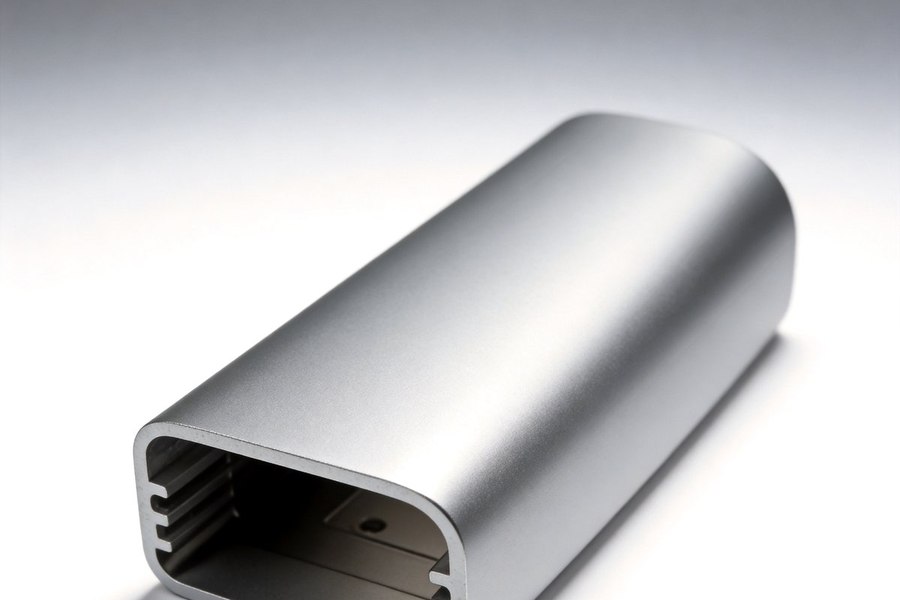
Heat Sink & Thermal Enclosures
Extruded aluminium heat sink enclosures with 0.3 mm fins, machined mounting faces at 0.05 mm flatness and polish-free 6063…
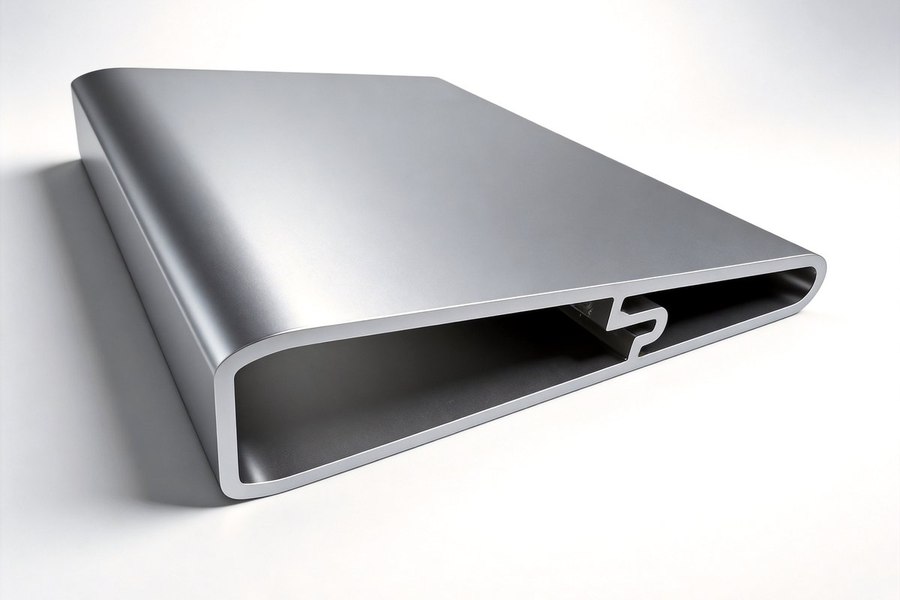
Energy Storage & Battery Enclosures
Extruded aluminium enclosures for portable power stations, home storage modules and BMS control boxes — 0.5–2.0 mm walls, ±0.005…
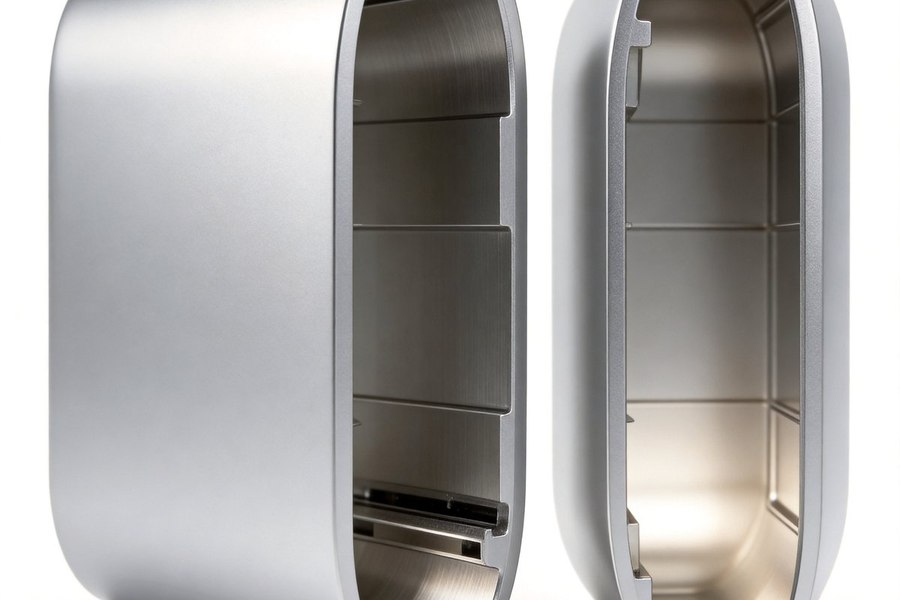
Optical Module & 5G Telecom Enclosures
Tight-tolerance extruded enclosures for 400G/800G optical modules, 5G AAU heat sinks and baseband units — ±0.04 mm bores, 0.3 mm…
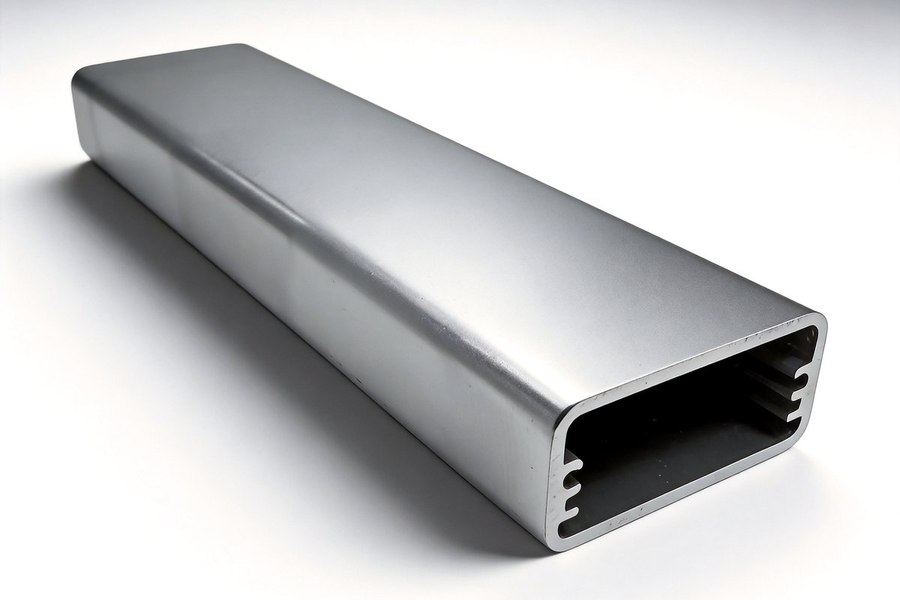
Automotive Electronics Enclosures
Vibration and temperature-cycled aluminium housings for on-board chargers, ECUs, display frames and auxiliary lighting —…
3C Consumer Electronics Enclosures
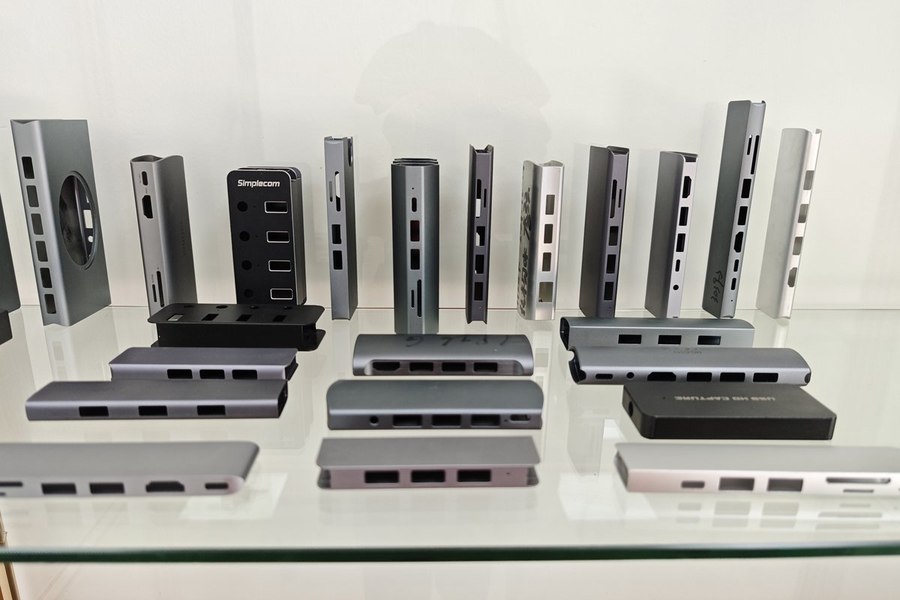
High-volume aluminium shells for external SSDs, docking stations, power banks and wireless chargers — ±0.005 mm cut-to-length…
Industrial Control & Instrument Enclosures
Extruded aluminium housings for PLC controllers, HMI panels, sensors and test instruments — machined cut-outs, grounding…
Send your device drawings and finish reference — we will confirm the finish route and quote tooling within one working day.