
Industrial equipment is the opposite of consumer electronics: fewer units, many more variants, and a service life measured in decades. The enclosure has to accept whatever connectors, displays and DIN-rail hardware the platform needs, provide a reliable earth path, and still be available for spares years after the original order. This is where a profile-based approach pays off — one die can serve a family of variants with different cut lengths and machining programmes.
What makes this enclosure difficult
These are the failure modes we see most often in this application — and the ones we design against from the first section drawing:
- Many variants, none of them high volume. A platform may ship in a dozen enclosure sizes, each selling in modest quantities.
- Earthing and shielding provisions. Industrial EMC requirements need a designed earth path, not an incidental one.
- Field-serviceability. Covers, hinges and removable panels have to stay dimensionally compatible over years.
- Long-term spares availability. Replacement enclosures must match the original build.
How we handle it
One die, many variants
This is the core economics of industrial enclosures. We design the section so that width, height or length variants come from cut length and machining programme rather than separate tooling. Send the platform range and we will propose the minimum number of dies that covers it.
Machined cut-outs and connector windows in one setup
Display apertures, connector cut-outs, threaded holes and datum faces are machined in the same fixturing so positional relationships hold — which matters most on panels that have to line up with internal hardware.
Earthing designed into the finish route
Standard anodising insulates. Where EMC requires a conductive path we discuss conductive oxidation, selective masking of earth pads, or plating, and build it into the process route during DFM review rather than discovering it at assembly.
Profile drawings retained for spares
We keep the die and the section drawing, so a replacement batch ordered years later matches the original. Dies are maintained rather than scrapped after a single run.
Low effective minimum for variant runs
Because variants share tooling, the minimum per variant is worked out from the shared extrusion batch rather than from each individual part number.
Capability that matters here
| Parameter | Typical capability | Why it matters |
|---|---|---|
| Variant strategy | One die, multiple lengths and programmes | Covers a platform range without new tooling |
| Inner / outer diameter tolerance | ±0.04 mm | Panel and DIN-rail hardware fit |
| Wall thickness tolerance | ±0.02 mm | Consistent stiffness and shielding |
| Cut-to-length accuracy | ±0.005 mm | Repeatable enclosure stack-up |
| Machined features | Cut-outs, threads, datum faces in one setup | No positional drift between operations |
| Earthing options | Conductive oxidation, masked earth pads, plating | Designed EMC path |
Typical parts we make for this industry
- PLC and controller housings
- HMI and operator panel frames
- Sensor and transmitter bodies
- Test and measurement instrument chassis
- Industrial gateway and converter cases
- DIN-rail mounted module enclosures
Material and finish
6063-T5 covers the majority of industrial housings. 6061-T6 or 6082 is specified where the enclosure is structural, carries threaded connections under load, or is used in higher-vibration installations.
Our polish-free 6063 route runs primary billet from a state-owned mill through ceramic filtration, degassing and homogenising, so the profile goes straight to 180# blasting and anodising with no polishing stage — typically around 15% less finishing cost. We deliberately do not take high-pressure die-casting work; all capacity goes into extruded profile and precision machining.
Questions buyers in this industry ask
We have twelve enclosure sizes — how many dies do we actually need?
Usually far fewer than twelve. Most industrial platforms differ in length, cut-out pattern and finish rather than in section geometry, so one die with different cut lengths and machining programmes can cover the range. Send the schedule and we will propose the minimum tooling set.
Can we still get enclosures years later for spares?
Yes. We retain the die and the section drawing for the life of the programme, so a later batch matches the original build. Die maintenance is included rather than the tool being disposed of after one run.
How do you handle earthing if anodising insulates the surface?
By planning it into the finish route. Options are conductive oxidation, masking specific earth pads so they stay bare, or plating. This is discussed during the free DFM review and written into the process route, so the earth path exists in production rather than being improvised in your assembly.
Where we ship these
Other industries we serve
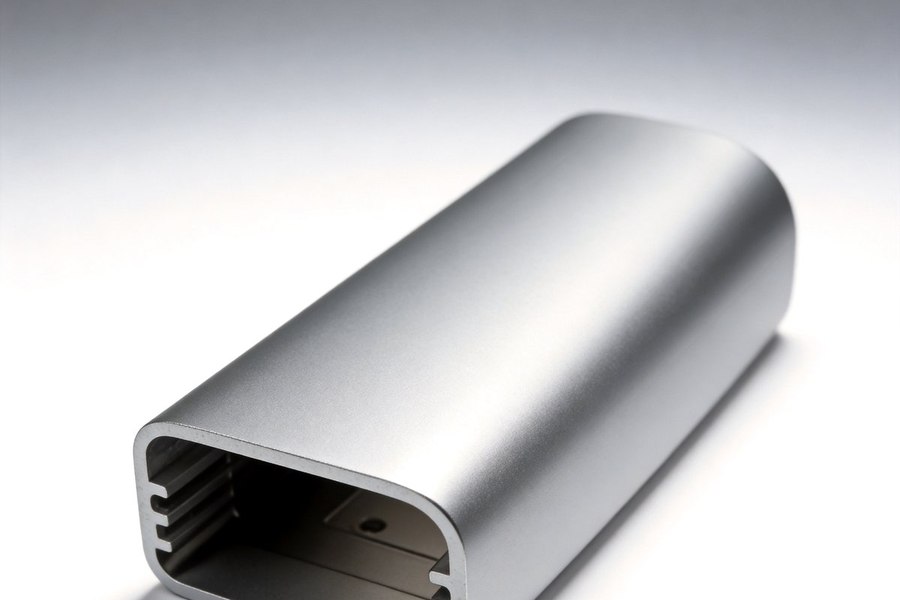
Heat Sink & Thermal Enclosures
Extruded aluminium heat sink enclosures with 0.3 mm fins, machined mounting faces at 0.05 mm flatness and polish-free 6063…
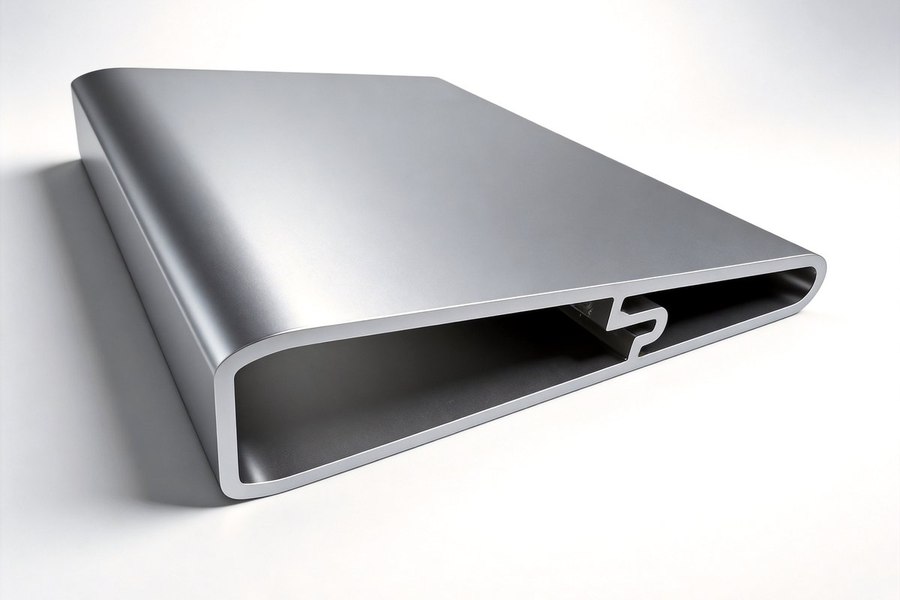
Energy Storage & Battery Enclosures
Extruded aluminium enclosures for portable power stations, home storage modules and BMS control boxes — 0.5–2.0 mm walls, ±0.005…
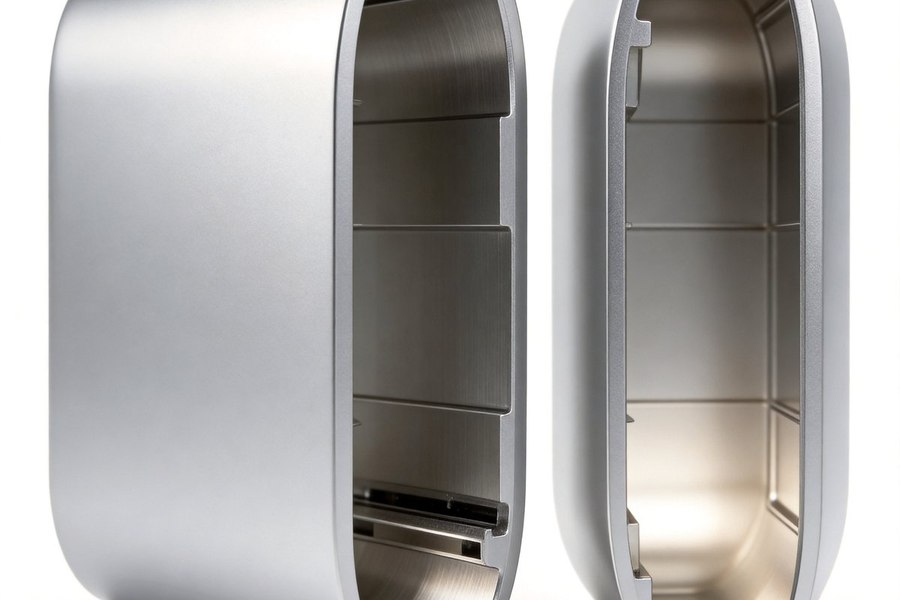
Optical Module & 5G Telecom Enclosures
Tight-tolerance extruded enclosures for 400G/800G optical modules, 5G AAU heat sinks and baseband units — ±0.04 mm bores, 0.3 mm…
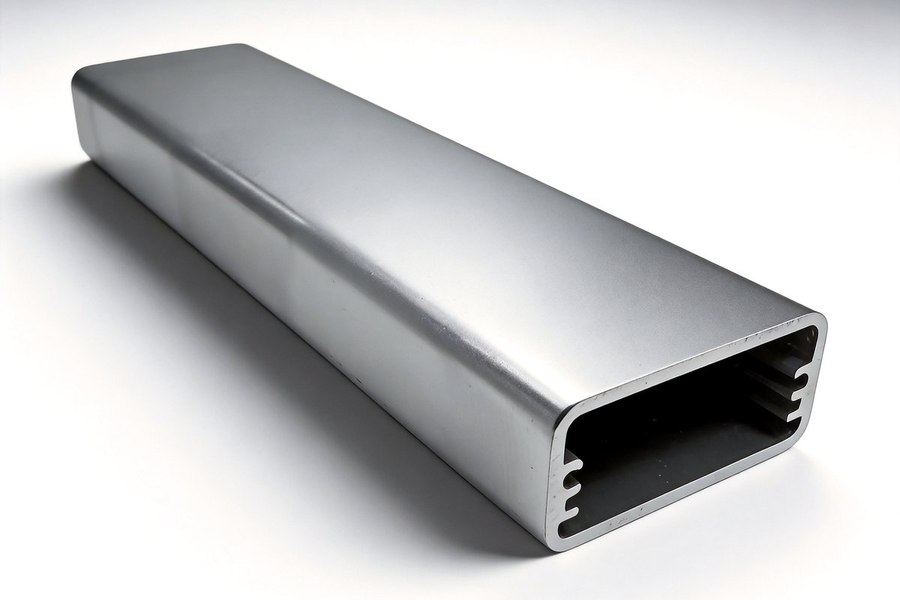
Automotive Electronics Enclosures
Vibration and temperature-cycled aluminium housings for on-board chargers, ECUs, display frames and auxiliary lighting —…
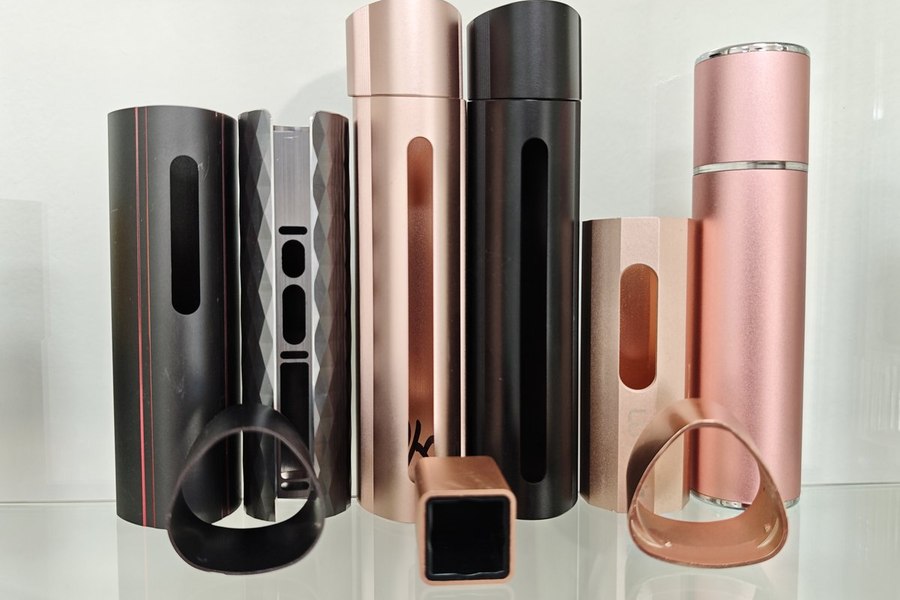
Medical & Beauty Device Enclosures
Cosmetic-grade aluminium housings for beauty instruments, hair styling tools and portable medical devices — polish-free 6063,…
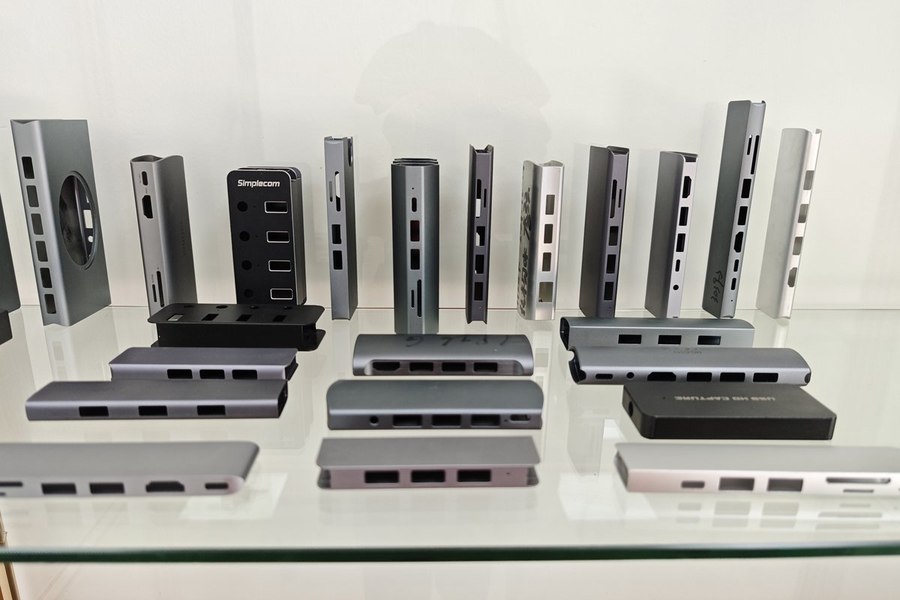
3C Consumer Electronics Enclosures
High-volume aluminium shells for external SSDs, docking stations, power banks and wireless chargers — ±0.005 mm cut-to-length…
Send your platform range and cut-out schedule — we will propose the minimum tooling set and quote within one working day.