
Consumer electronics is a volume game with a cosmetic finish requirement, which is a hard combination. The enclosure has to look premium on a retail shelf, fit an automated assembly line to a few microns, and land at a unit cost that survives the channel margin. Our answer is the polish-free route plus tight cut-to-length: less finishing cost, and parts that drop straight into your line without a sizing operation.
What makes this enclosure difficult
These are the failure modes we see most often in this application — and the ones we design against from the first section drawing:
- Unit cost pressure at high volume. Every unnecessary finishing operation is multiplied by the run size.
- Automated assembly cannot absorb dimensional drift. A case that is 0.2 mm long jams the fixture.
- Cosmetic consistency on retail shelves. Colour and texture variation is visible when units sit side by side.
- Product cycles are short. Tooling has to pay back inside a single generation.
How we handle it
Polish-free 6063 removes a whole operation
Filtered, degassed and homogenised primary billet gives a surface fine enough to go straight to 180# blasting and anodising. Removing the polishing stage typically saves around 15% of finishing cost — at consumer volumes that is the difference between winning and losing the programme.
±0.005 mm cut-to-length
Cases arrive at length and drop into the fixture. Most customers find they can remove an in-house sizing step entirely, which saves more than the per-piece cost difference.
Tooling that pays back inside one generation
New die in 4–5 days and samples in 7 days, with three rounds of free sampling. Short development cycles mean you can commit to tooling later in the design process, after the enclosure geometry is actually frozen.
2-tonne tooling waiver for scaling programmes
If a single order reaches 2 tonnes the tooling fee is fully waived — relevant when a product moves from an initial run into a full-scale launch.
Family tooling across a product range
Where several models share a design language, we often propose one die with different cut lengths and machining programmes. Send the family and we will flag where this is possible.
Capability that matters here
| Parameter | Typical capability | Why it matters |
|---|---|---|
| Cut-to-length accuracy | ±0.005 mm | Direct feed into automated assembly |
| Inner / outer diameter tolerance | ±0.04 mm | PCB and connector fit without hand selection |
| Wall thickness | From 0.3 mm | Light, stiff, material-efficient |
| Finishing route | 180# blast + anodise, no polishing | Around 15% lower finishing cost |
| Tooling to first sample | 4–5 days / 7 days | Fits short product cycles |
| Annual capacity | 3,500 t profile / ~500,000 enclosures | Scales with a launch |
Typical parts we make for this industry
- External SSD and portable hard drive enclosures
- Docking station and USB hub cases
- Power bank and wireless charger shells
- Bluetooth speaker bodies
- Streaming and capture device housings
- Compact desktop accessory chassis
Material and finish
6063-T5 for almost all 3C shells — it gives fine section detail, a uniform anodised finish and the lowest finishing cost. 6061-T6 only where the shell carries load or threaded connections under stress.
Our polish-free 6063 route runs primary billet from a state-owned mill through ceramic filtration, degassing and homogenising, so the profile goes straight to 180# blasting and anodising with no polishing stage — typically around 15% less finishing cost. We deliberately do not take high-pressure die-casting work; all capacity goes into extruded profile and precision machining.
Questions buyers in this industry ask
Can you handle a launch volume that scales quickly?
Yes. Two automated extrusion lines, 30 CNC centres and 10 stamping presses give us roughly 3,500 tonnes of profile and 500,000 enclosures a year. For a firm forecast we can hold extruded stock at our 3,000 m² warehouse and release machined batches on call, which is the usual way to handle a ramp.
Is the tooling fee waived at high volume?
Yes — when a single order reaches 2 tonnes the tooling fee is fully waived. For anything below that, we quote the tooling cost and the piece price together so you can see the break-even before committing.
How fast can we get samples for a design review?
New die in 4–5 days, samples in 7 days, and three rounds of free sampling are included. That means you can usually go from drawing approval to a physical sample inside two weeks, including the DFM review at the start.
Where we ship these
Other industries we serve
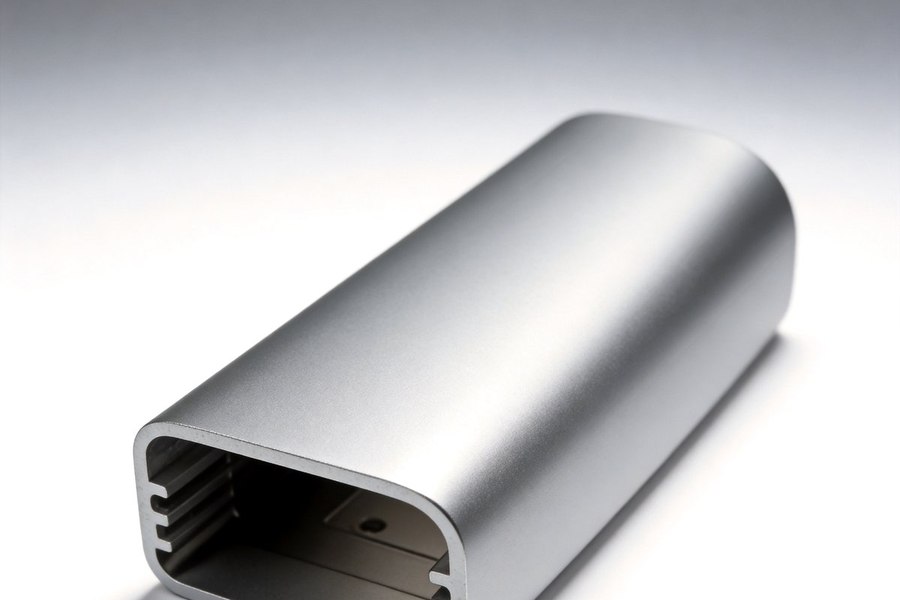
Heat Sink & Thermal Enclosures
Extruded aluminium heat sink enclosures with 0.3 mm fins, machined mounting faces at 0.05 mm flatness and polish-free 6063…
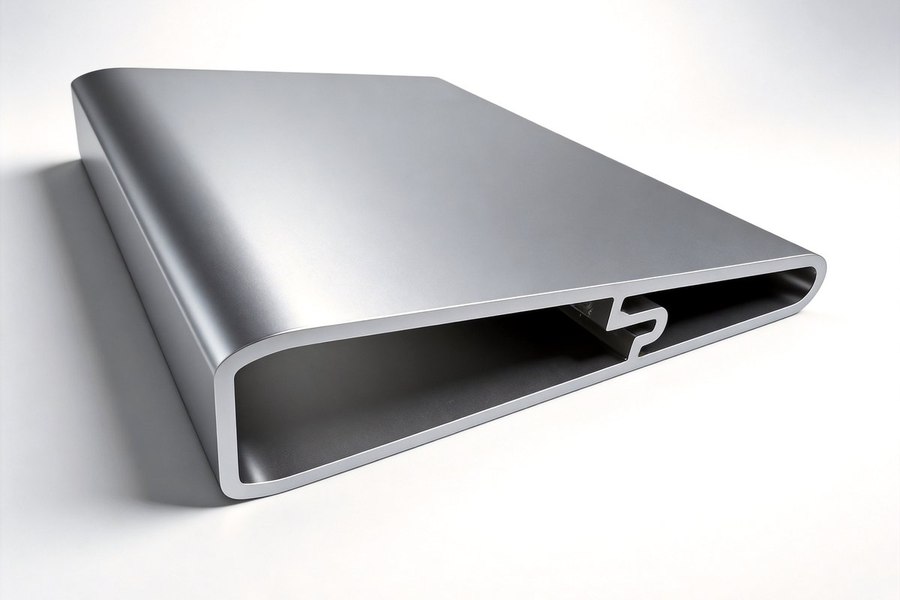
Energy Storage & Battery Enclosures
Extruded aluminium enclosures for portable power stations, home storage modules and BMS control boxes — 0.5–2.0 mm walls, ±0.005…
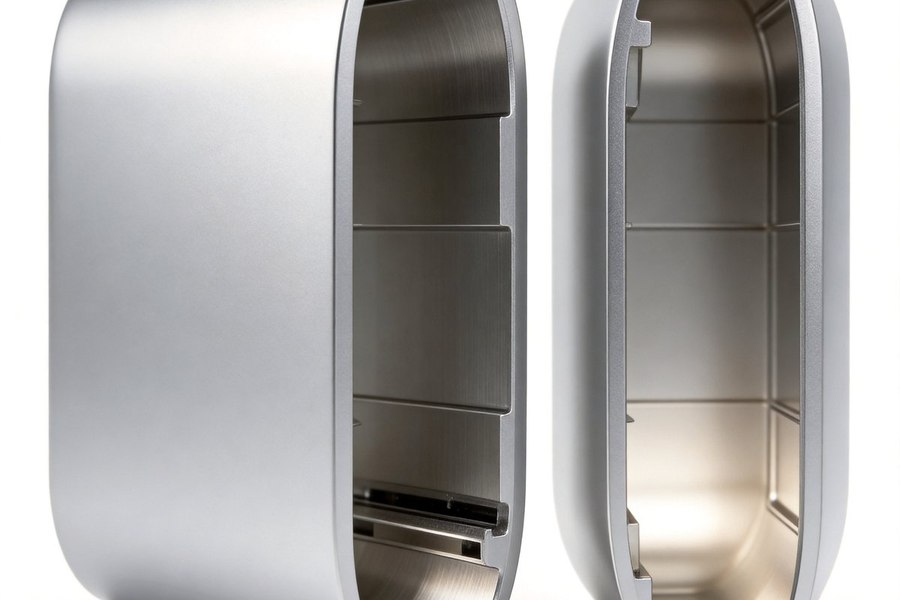
Optical Module & 5G Telecom Enclosures
Tight-tolerance extruded enclosures for 400G/800G optical modules, 5G AAU heat sinks and baseband units — ±0.04 mm bores, 0.3 mm…
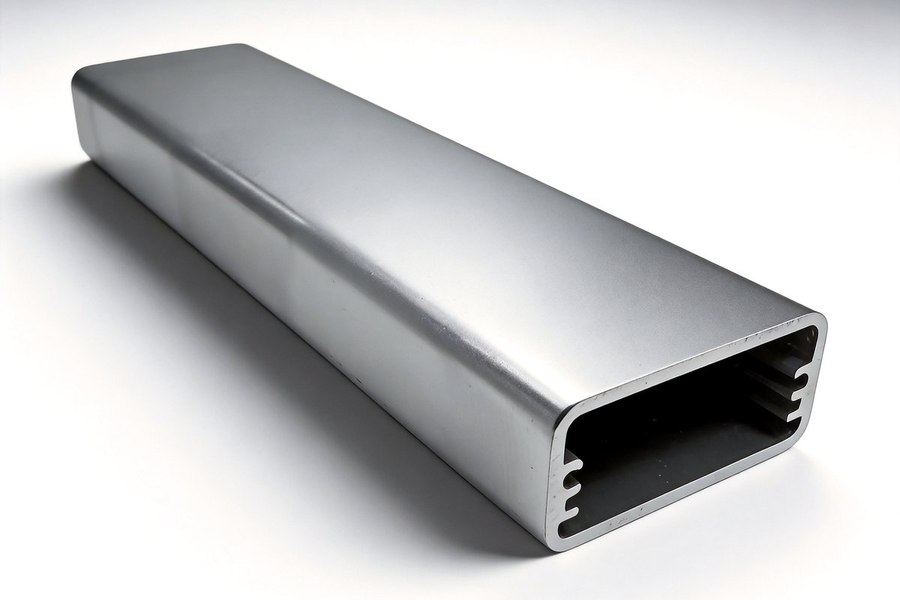
Automotive Electronics Enclosures
Vibration and temperature-cycled aluminium housings for on-board chargers, ECUs, display frames and auxiliary lighting —…
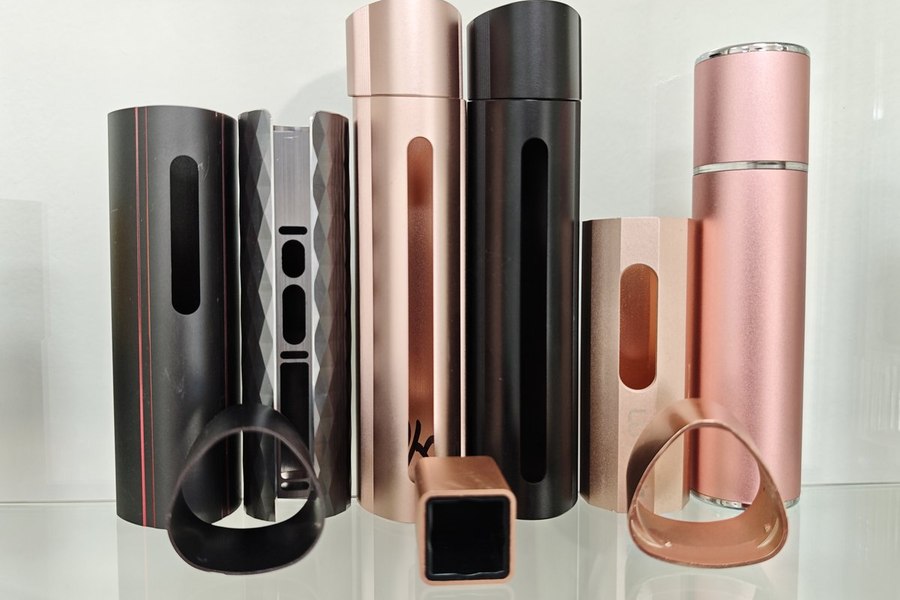
Medical & Beauty Device Enclosures
Cosmetic-grade aluminium housings for beauty instruments, hair styling tools and portable medical devices — polish-free 6063,…
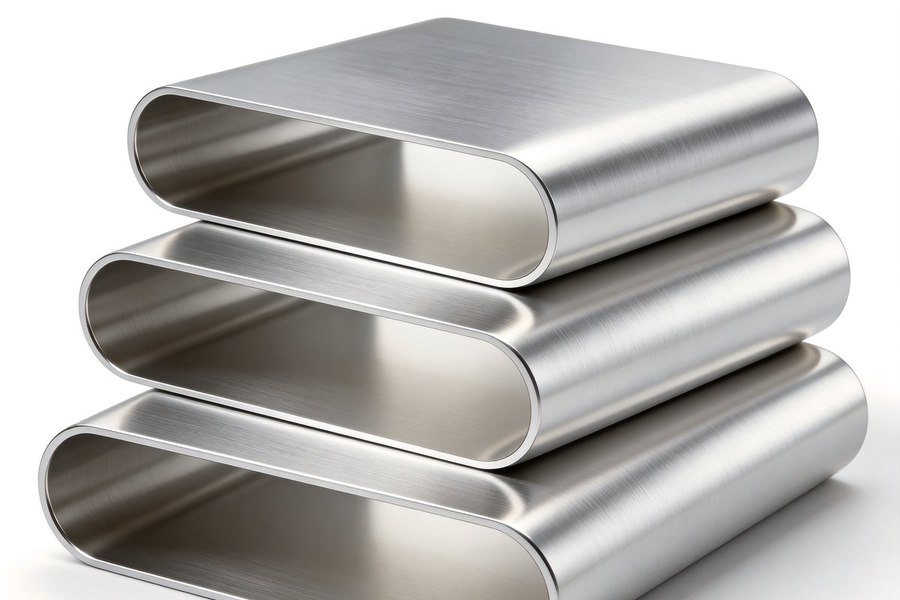
Industrial Control & Instrument Enclosures
Extruded aluminium housings for PLC controllers, HMI panels, sensors and test instruments — machined cut-outs, grounding…
Send your enclosure drawing and forecast volume — tooling cost, piece price and sample schedule within one working day.