
Energy storage products have a brutal combination of requirements: the housing has to be a structural frame, a heat path, a fire-rated barrier and a consumer-visible surface, all at a price point that makes steel or plastic tempting. Extruded aluminium wins when you need stiffness and thermal spreading in a thin wall, and when the product has to survive being carried around. We build these from the profile up, including the machined features that make sealing and automated assembly work.
What makes this enclosure difficult
These are the failure modes we see most often in this application — and the ones we design against from the first section drawing:
- Wall thickness fights between weight and stiffness. Portable units are carried, so every gram counts, yet the case still has to pass drop and stacking load requirements.
- Sealing has to be designed into the section. Retrofitting a gasket groove into a finished extrusion is expensive; it belongs in the die from the start.
- Thin-wall sections distort during machining. A 0.5 mm wall that is clamped badly comes off the CNC table bowed.
- Consistency across thousands of units. Automated battery-pack assembly lines cannot tolerate dimensional drift in the case.
How we handle it
Section designed around the pack, not the other way round
We review your cell layout, module frame and thermal path before proposing a profile, so stiffening ribs, screw bosses and seal grooves are extruded features rather than machined ones. This is usually where the real cost saving sits.
0.5–2.0 mm walls held to ±0.02 mm
Our internal wall-thickness tolerance is ±0.02 mm against a GB standard of ±0.05 mm, and we routinely run 0.3 mm sections where the geometry allows. That is what makes a thin, light case repeatable instead of marginal.
±0.005 mm cut-to-length for line-feed assembly
Cases arrive at your pack line already at length, so they drop straight into the fixture. This is the single change that most often lets customers remove a sizing operation from their own process.
Machining fixtures built for thin walls
We machine thin-wall battery sections on dedicated fixtures rather than generic clamping, and CNC the seal grooves, connector cut-outs and threaded holes in the same setup to hold positional accuracy.
Finishing matched to indoor or outdoor duty
Indoor module cases usually take natural or black anodising; outdoor cabinet components move to powder coating for UV and weather resistance. We will tell you when a specified coating is likely to interfere with a thermal interface or a grounding path.
Capability that matters here
| Parameter | Typical capability | Why it matters |
|---|---|---|
| Wall thickness range | 0.5 – 2.0 mm (0.3 mm possible) | Weight versus stiffness balance |
| Wall thickness tolerance | ±0.02 mm | Predictable structural performance |
| Cut-to-length accuracy | ±0.005 mm | Direct feed into automated pack lines |
| Inner / outer diameter tolerance | ±0.04 mm | Module fit without hand selection |
| Seal groove / connector cut-outs | CNC in the same setup | Positional accuracy for IP ratings |
| Surface options | Anodising, powder coating | Indoor finish or outdoor weathering |
Typical parts we make for this industry
- Portable power station outer shells
- Home storage battery module frames
- BMS control and junction boxes
- Inverter and PCS cooling housings
- Battery module end plates and side rails
- Outdoor storage cabinet structural profiles
Material and finish
Most energy storage enclosures run on 6063-T5 for extrudability and finish quality. Where the case carries significant structural load or needs threaded connections that see repeated service, 6061-T6 or 6082 is specified and we re-quote the section accordingly.
Our polish-free 6063 route runs primary billet from a state-owned mill through ceramic filtration, degassing and homogenising, so the profile goes straight to 180# blasting and anodising with no polishing stage — typically around 15% less finishing cost. We deliberately do not take high-pressure die-casting work; all capacity goes into extruded profile and precision machining.
Questions buyers in this industry ask
Can you help us design the seal groove and IP rating?
Yes. Tell us the target IP rating and the gasket you intend to use, and we will put the groove geometry into the die drawing rather than machining it afterwards. We do not certify the finished IP rating ourselves — that depends on your final assembly — but we machine and hold the dimensions that make your rating achievable.
How do you stop thin-wall cases distorting in machining?
Fixture design, mostly. Long thin-wall battery sections are supported along their length rather than clamped at two points, and roughing and finishing passes are separated so residual stress is not trapped in the finished part. We will flag any feature that we think will move.
What volumes can you support for a growing storage programme?
We run 3,500 tonnes of profile and around 500,000 enclosures a year across two extrusion lines, 30 CNC centres and 10 stamping presses. For programmes with a firm forecast we can hold extruded stock at our 3,000 m² warehouse and release machined batches on call, which is usually how customers handle seasonal demand spikes.
Where we ship these
Other industries we serve
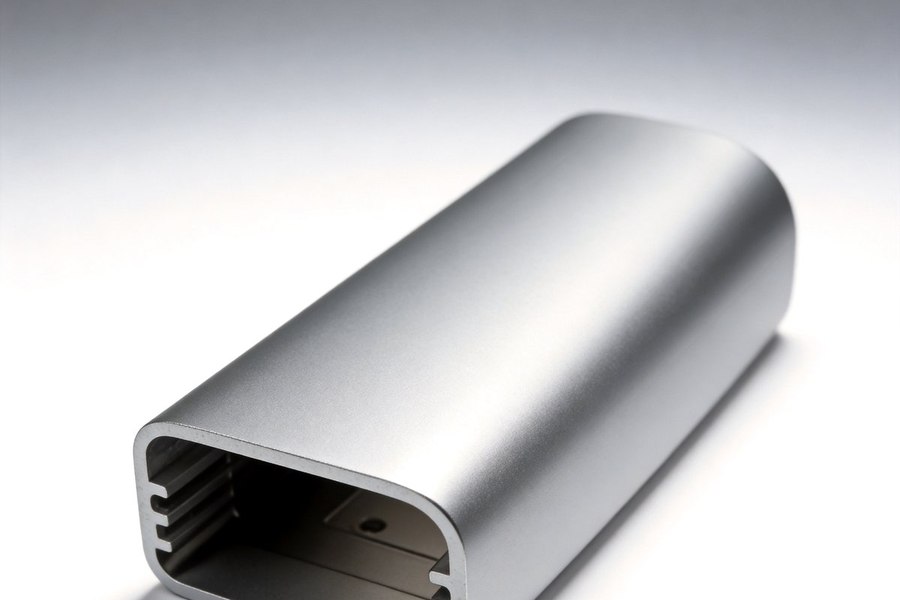
Heat Sink & Thermal Enclosures
Extruded aluminium heat sink enclosures with 0.3 mm fins, machined mounting faces at 0.05 mm flatness and polish-free 6063…
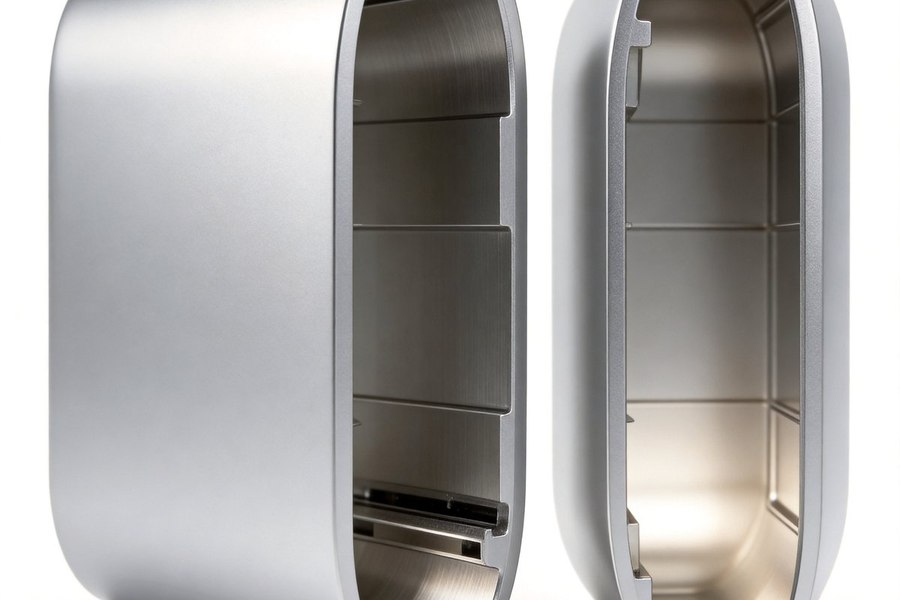
Optical Module & 5G Telecom Enclosures
Tight-tolerance extruded enclosures for 400G/800G optical modules, 5G AAU heat sinks and baseband units — ±0.04 mm bores, 0.3 mm…
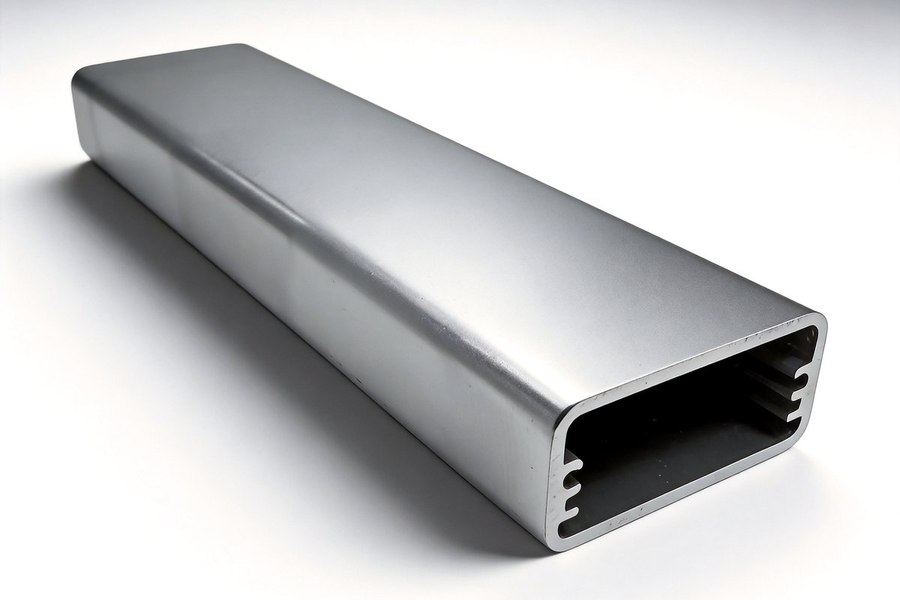
Automotive Electronics Enclosures
Vibration and temperature-cycled aluminium housings for on-board chargers, ECUs, display frames and auxiliary lighting —…
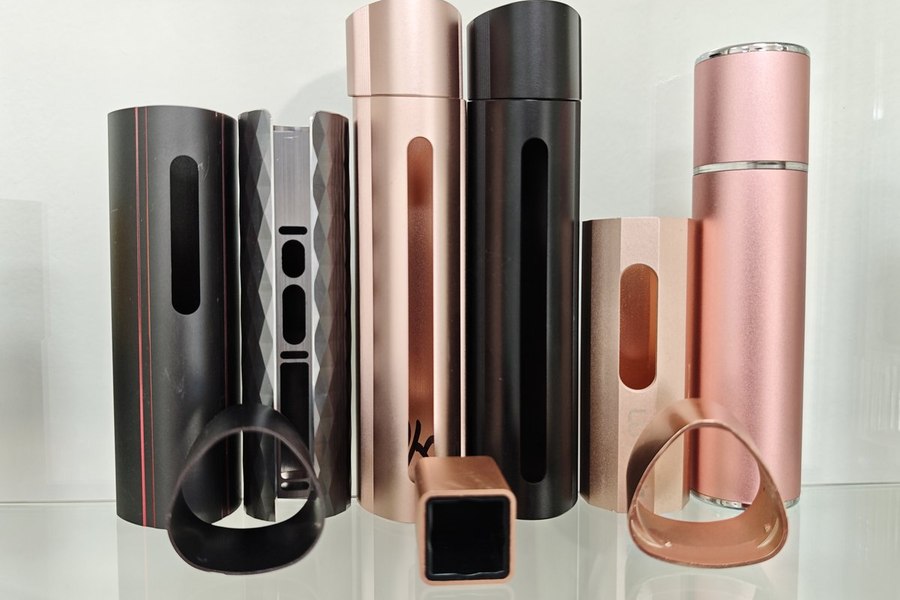
Medical & Beauty Device Enclosures
Cosmetic-grade aluminium housings for beauty instruments, hair styling tools and portable medical devices — polish-free 6063,…
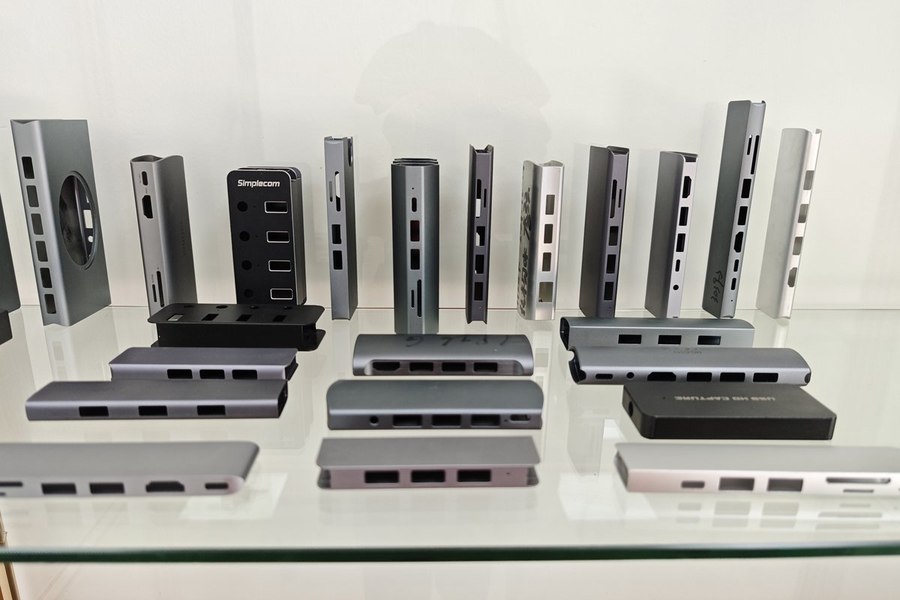
3C Consumer Electronics Enclosures
High-volume aluminium shells for external SSDs, docking stations, power banks and wireless chargers — ±0.005 mm cut-to-length…
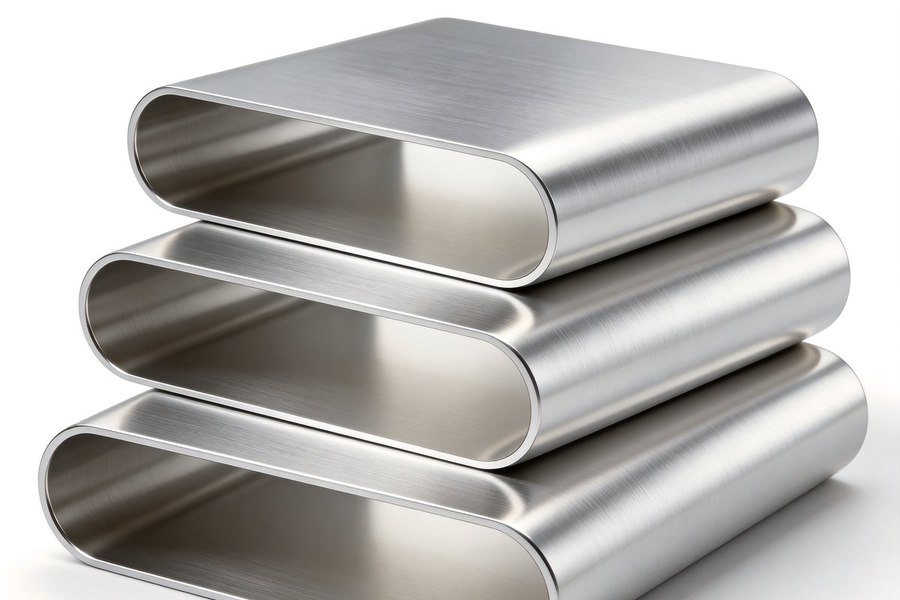
Industrial Control & Instrument Enclosures
Extruded aluminium housings for PLC controllers, HMI panels, sensors and test instruments — machined cut-outs, grounding…
Send your pack layout and target IP rating — we will propose a section with the seal groove designed in, plus a tooling quote, within one working day.