
Emerging device categories do not behave like mature ones: the product definition is still moving when the tooling decision has to be made, and the window closes in months. What matters is not the lowest unit price but how fast you can get a physical part, change it, and get another one. Our short tooling lead time and free sample rounds are designed exactly for this — you can go through three geometry iterations before committing to volume.
What makes this enclosure difficult
These are the failure modes we see most often in this application — and the ones we design against from the first section drawing:
- The design is not frozen when tooling has to start. Committing to a die too early is the most expensive mistake in this segment.
- Differentiation is in the enclosure. When the function is commoditised, the housing carries the brand.
- Uncertain volume. Nobody knows whether the category will sustain 5,000 units or 500,000.
- Time to market dominates unit cost. Missing the season costs more than a slightly higher piece price.
How we handle it
Prototype from solid bar before any die is cut
We can machine prototype quantities on CNC without tooling, so you can validate ergonomics, fit and finish while the geometry is still changing. Move to extrusion only once the design is frozen — this is the cheapest way to avoid a die you have to remake.
New die in 4–5 days, samples in 7 days
Once you do commit, the tooling and sampling cycle is short enough to fit inside an active development schedule rather than dictating it.
Three rounds of free sampling
Included. If the first article needs a wall thickness, fillet or length change, rounds two and three do not add cost or reset the schedule — which is what makes iterating practical instead of theoretical.
Low tooling cost relative to die casting
Extrusion dies cost a fraction of a die-cast tool, so the payback threshold is far lower and the risk of an uncertain-volume category is manageable. At 2 tonnes the tooling fee is fully waived.
Finishing that carries the brand
Blasting, brushing, anodising in a range of colours, silk-screen and laser engraving for logos — all in-house, so a finish decision late in development does not add a supplier and a delay.
Capability that matters here
| Parameter | Typical capability | Why it matters |
|---|---|---|
| Prototype route | CNC from solid bar, no tooling | Validate before committing to a die |
| New die development | 4–5 days | Fits an active development schedule |
| First samples | 7 days | Fast physical feedback |
| Free sample rounds | 3 included | Iterate without cost reset |
| Tooling waiver | Fully waived at 2 tonnes | Risk managed on uncertain volume |
| Branding | Silk-screen, laser engraving, embossing in-house | Logo and finish decisions late in the cycle |
Typical parts we make for this industry
- Handheld and neck fan housings
- Vaping and atomiser device bodies
- Selfie stick and tripod tube bodies
- Gimbal and action-camera accessory parts
- Portable projector and speaker bodies
- New-form-factor gadget housings
Material and finish
6063-T5 for almost all emerging device bodies, for fine section detail and a consistent anodised finish. 6061-T6 where the housing is structural or threaded under load.
Our polish-free 6063 route runs primary billet from a state-owned mill through ceramic filtration, degassing and homogenising, so the profile goes straight to 180# blasting and anodising with no polishing stage — typically around 15% less finishing cost. We deliberately do not take high-pressure die-casting work; all capacity goes into extruded profile and precision machining.
Questions buyers in this industry ask
The design is still changing — when should we cut tooling?
Not yet. Machine prototypes from solid bar first, freeze the geometry with real parts in hand, then cut the die. Because prototyping needs no tooling, this costs you time rather than tooling spend, and it avoids the most common expensive mistake in this segment.
What happens if the first sample needs changes?
Three rounds of free sampling are included, so the second and third iterations do not add cost or push the schedule back to the start. This is deliberate — on emerging categories, the first article almost always teaches you something.
What if we are not sure about volume?
Extrusion tooling cost is low relative to die casting, so the break-even volume is modest, and if a single order reaches 2 tonnes the tooling fee is fully waived. We quote tooling and piece price together so you can see the break-even before deciding.
Where we ship these
Other industries we serve
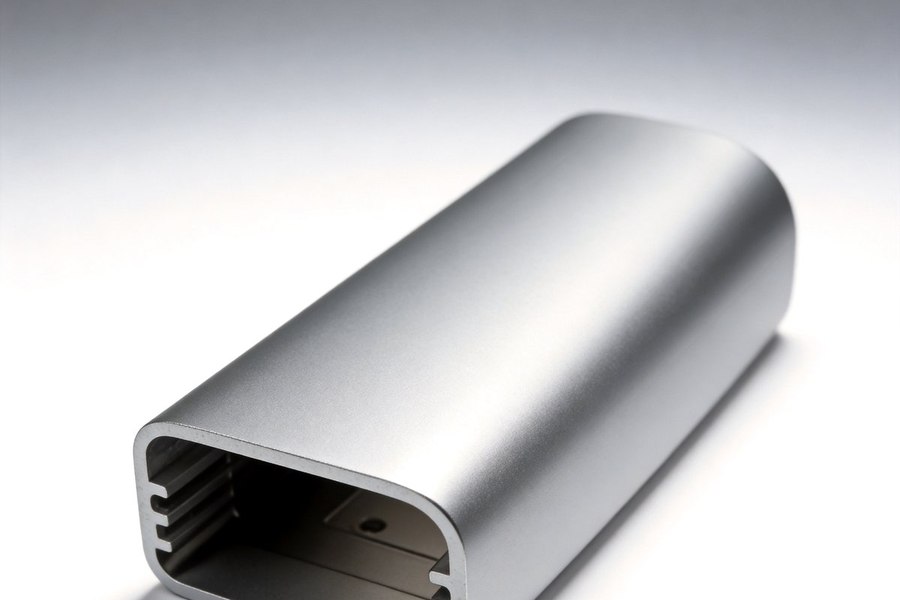
Heat Sink & Thermal Enclosures
Extruded aluminium heat sink enclosures with 0.3 mm fins, machined mounting faces at 0.05 mm flatness and polish-free 6063…
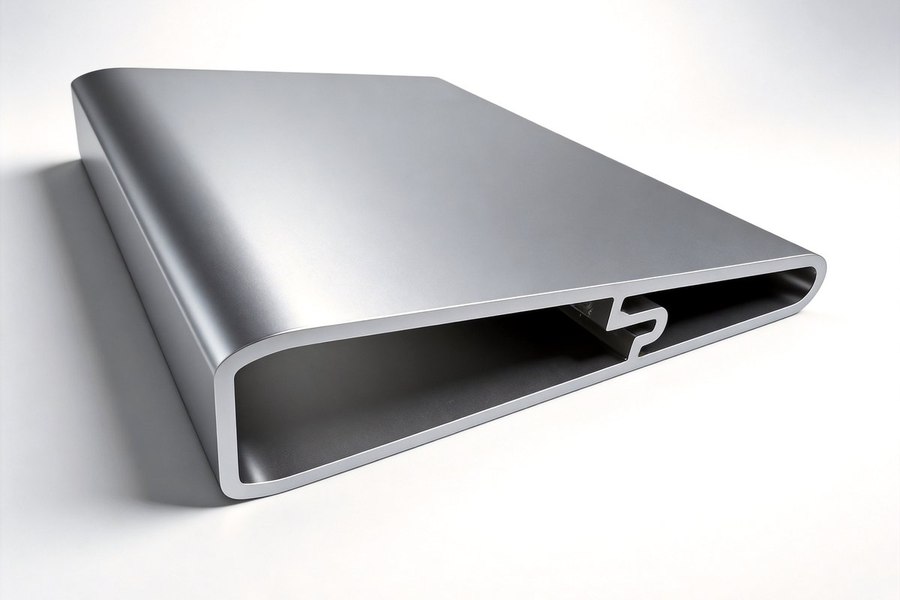
Energy Storage & Battery Enclosures
Extruded aluminium enclosures for portable power stations, home storage modules and BMS control boxes — 0.5–2.0 mm walls, ±0.005…
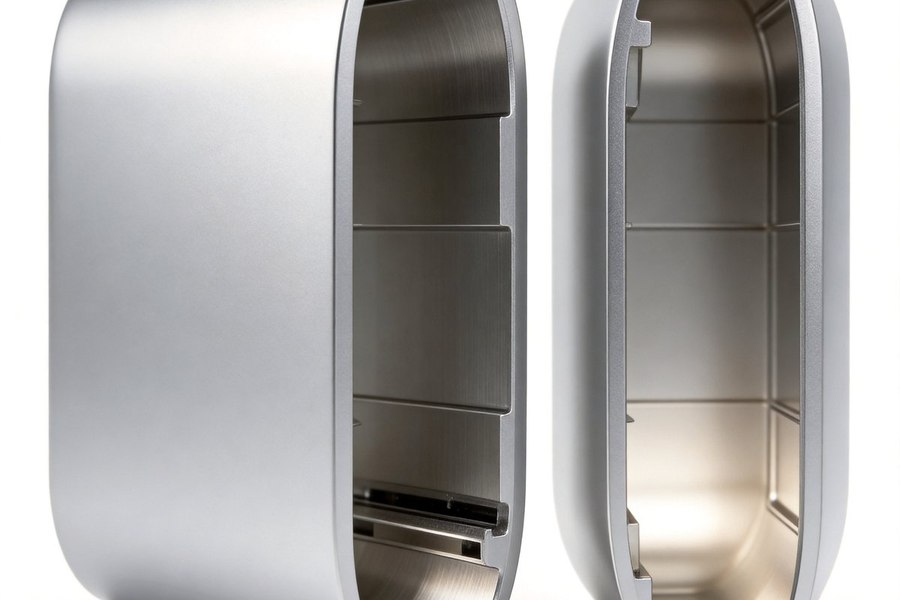
Optical Module & 5G Telecom Enclosures
Tight-tolerance extruded enclosures for 400G/800G optical modules, 5G AAU heat sinks and baseband units — ±0.04 mm bores, 0.3 mm…
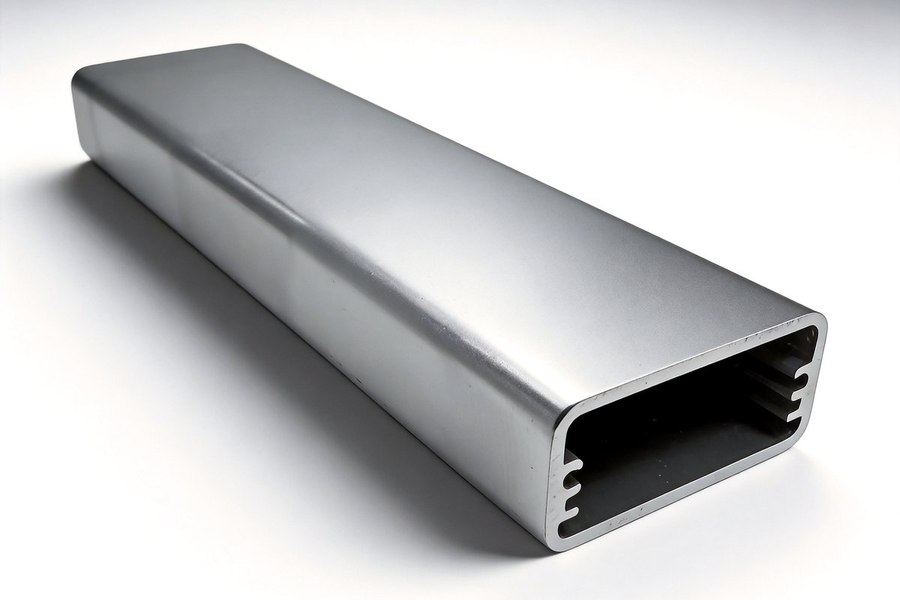
Automotive Electronics Enclosures
Vibration and temperature-cycled aluminium housings for on-board chargers, ECUs, display frames and auxiliary lighting —…
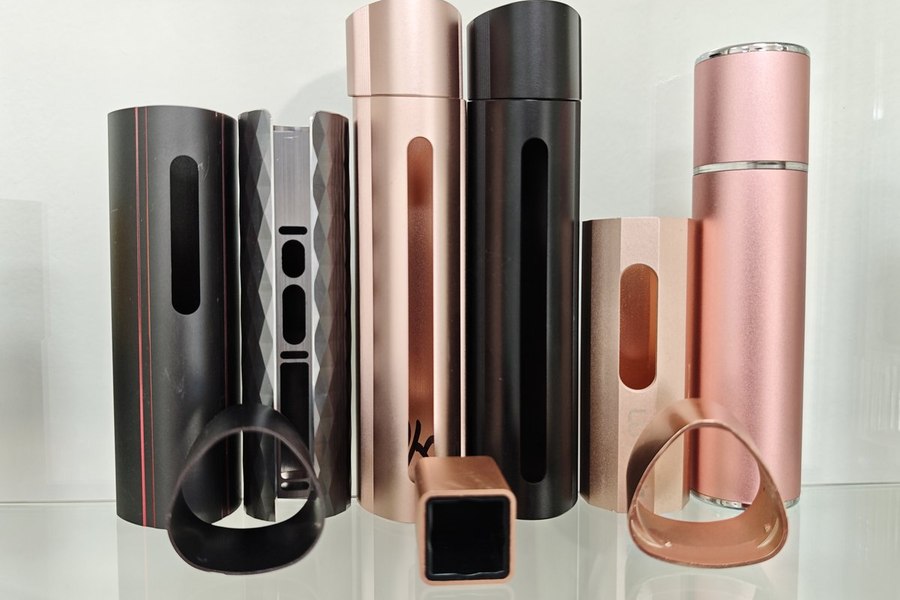
Medical & Beauty Device Enclosures
Cosmetic-grade aluminium housings for beauty instruments, hair styling tools and portable medical devices — polish-free 6063,…
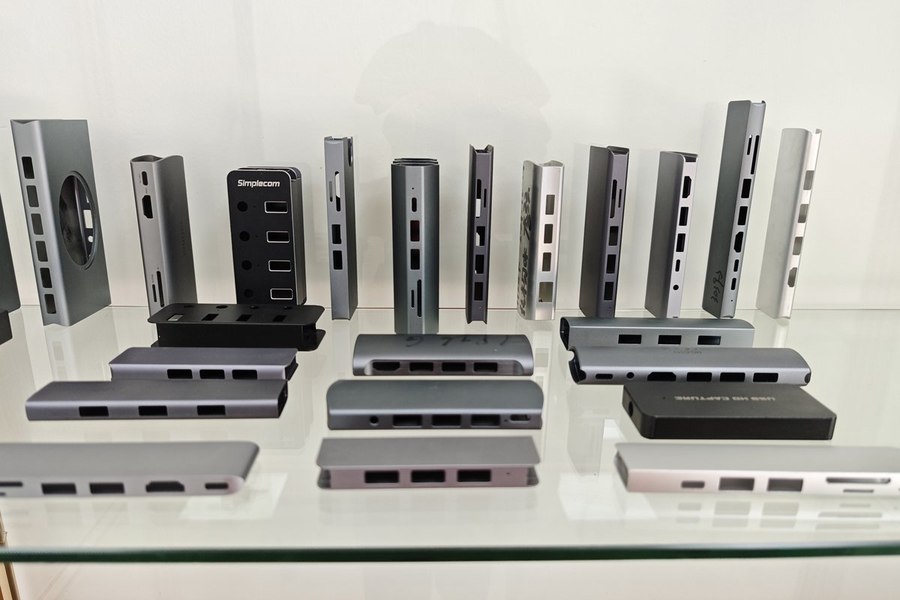
3C Consumer Electronics Enclosures
High-volume aluminium shells for external SSDs, docking stations, power banks and wireless chargers — ±0.005 mm cut-to-length…
Send your concept drawings — we will advise whether to prototype or tool first, and quote both paths within one working day.