
LED lumen output is directly hostage to junction temperature, and the housing is the heat sink. That makes the luminaire body the component that decides whether a fitting reaches its claimed 50,000-hour life or fails early. Extrusion is the natural process here: long lengths, fine fins, and no per-fin machining cost. The hard parts are straightness over long lengths and consistency of the thermal interface.
What makes this enclosure difficult
These are the failure modes we see most often in this application — and the ones we design against from the first section drawing:
- Straightness over long lengths. A linear profile that bows looks wrong and mounts badly, and it gets worse if residual stress is not managed.
- Thermal path from board to fin. The LED PCB mounting face has to be flat and clean or the whole heat sink underperforms.
- Outdoor weathering versus indoor cosmetics. Exterior fittings need coating durability; architectural interior fittings need colour consistency.
- Cost per metre. Lighting is extremely price sensitive and often quoted per metre of profile.
How we handle it
Fin geometry designed around the wattage
Tell us the dissipated power, mounting orientation and whether the fitting is convection-cooled or enclosed, and we will propose a fin section that the press can hold. Fins from 0.3 mm are routine; we will be honest when an aspect ratio is beyond stable volume production.
Flat, clean LED board mounting face
The interface to the LED PCB is machined for flatness and a fine finish, so thermal interface material stays thin and the board sits true. This is the single detail that most often separates a fitting that meets its life claim from one that does not.
Straightness managed from extrusion through handling
Long linear sections are extruded, stretched and handled with straightness in mind, and we check it rather than assuming it. If your mounting method is sensitive to bow we will discuss the tolerance explicitly at quotation stage.
Finish matched to the installation
Anodising for indoor architectural fittings where appearance and thermal radiation matter; powder coating for exterior and industrial fittings where UV and corrosion resistance come first. We will flag if a specified coating thickness would measurably insulate a thermal surface.
Cut-to-length for fixture assembly
±0.005 mm cut-to-length means profiles arrive ready for end-cap and driver assembly without rework.
Capability that matters here
| Parameter | Typical capability | Why it matters |
|---|---|---|
| Fin thickness | From 0.3 mm | More convection area per metre |
| Profile length | Standard mill lengths, cut to size | Matches fixture dimensions |
| LED board mounting face | Machined for flatness | Thin, uniform thermal interface |
| Cut-to-length accuracy | ±0.005 mm | No rework before end-cap assembly |
| Finishes | Anodising, powder coating | Indoor appearance or outdoor durability |
| Base alloy | 6063-T5 | ~209 W/m·K, fine fin detail |
Typical parts we make for this industry
- LED tube (T5/T8 retrofit) housings
- Linear architectural luminaire profiles
- High-bay and industrial fitting heat sinks
- Floodlight and area light bodies
- Track light and downlight heat sink bodies
- Grow light and horticultural luminaire profiles
Material and finish
6063-T5 is standard across lighting — it extrudes into fine fins and gives a uniform anodised finish. 6061 is used only where the luminaire body is also a structural element.
Our polish-free 6063 route runs primary billet from a state-owned mill through ceramic filtration, degassing and homogenising, so the profile goes straight to 180# blasting and anodising with no polishing stage — typically around 15% less finishing cost. We deliberately do not take high-pressure die-casting work; all capacity goes into extruded profile and precision machining.
Questions buyers in this industry ask
Can you design the heat sink section around our thermal target?
Yes. Give us the LED wattage, driver losses, mounting orientation, ambient range and available envelope, and we will propose a fin section and tell you what we expect it to achieve. If your target cannot be met by extrusion within the envelope, we will say so at that stage.
How is straightness handled on long linear profiles?
Through extrusion practice, stretching and handling, with inspection rather than assumption. If your mounting has a low tolerance for bow, tell us at quotation stage so the requirement is explicit and checked rather than implied.
Anodising or powder coating for outdoor fittings?
Usually powder coating for exterior and industrial fittings — UV and corrosion resistance matter more than the thermal emissivity benefit of anodising. For indoor architectural work anodising usually wins on appearance. We will flag it if a specified coating would insulate a surface that needs to dissipate heat.
Where we ship these
Other industries we serve
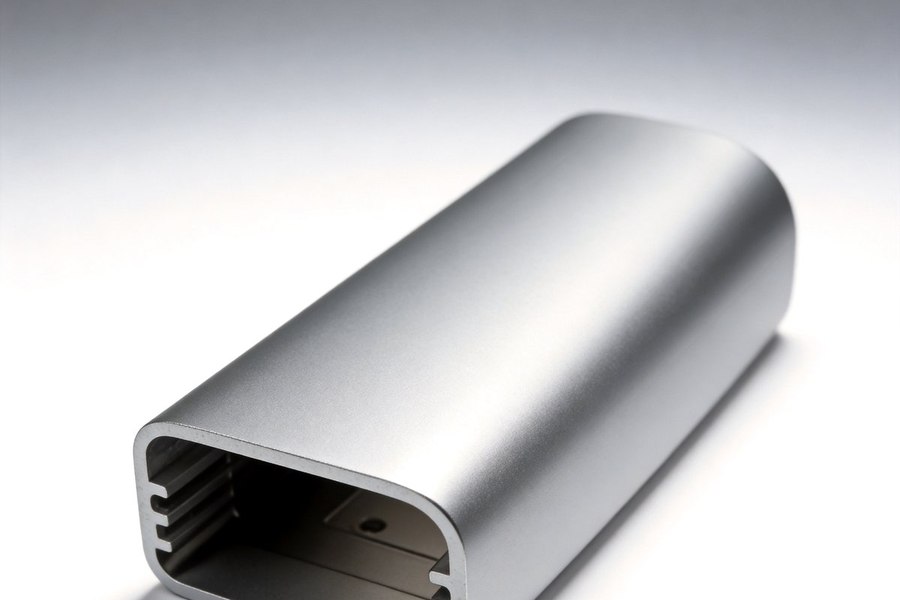
Heat Sink & Thermal Enclosures
Extruded aluminium heat sink enclosures with 0.3 mm fins, machined mounting faces at 0.05 mm flatness and polish-free 6063…
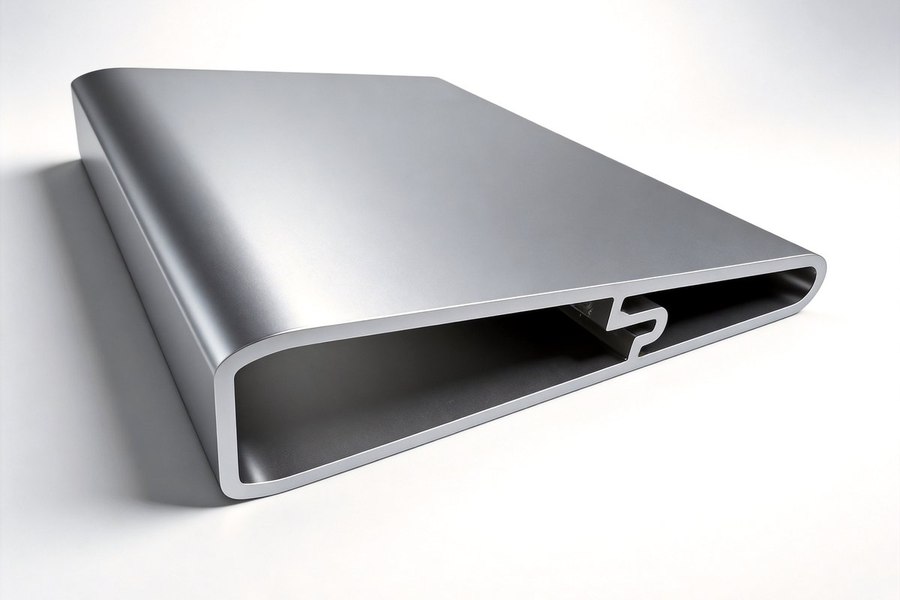
Energy Storage & Battery Enclosures
Extruded aluminium enclosures for portable power stations, home storage modules and BMS control boxes — 0.5–2.0 mm walls, ±0.005…
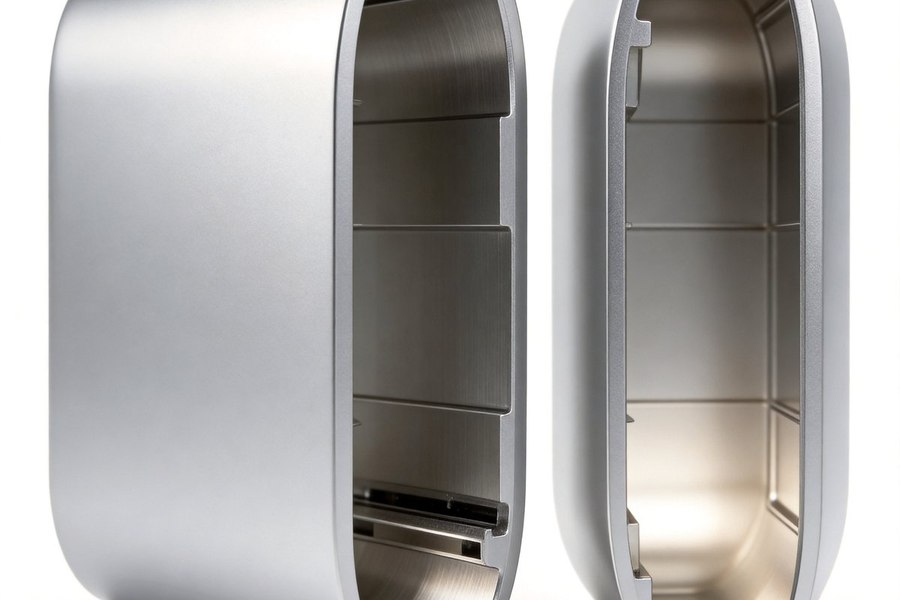
Optical Module & 5G Telecom Enclosures
Tight-tolerance extruded enclosures for 400G/800G optical modules, 5G AAU heat sinks and baseband units — ±0.04 mm bores, 0.3 mm…
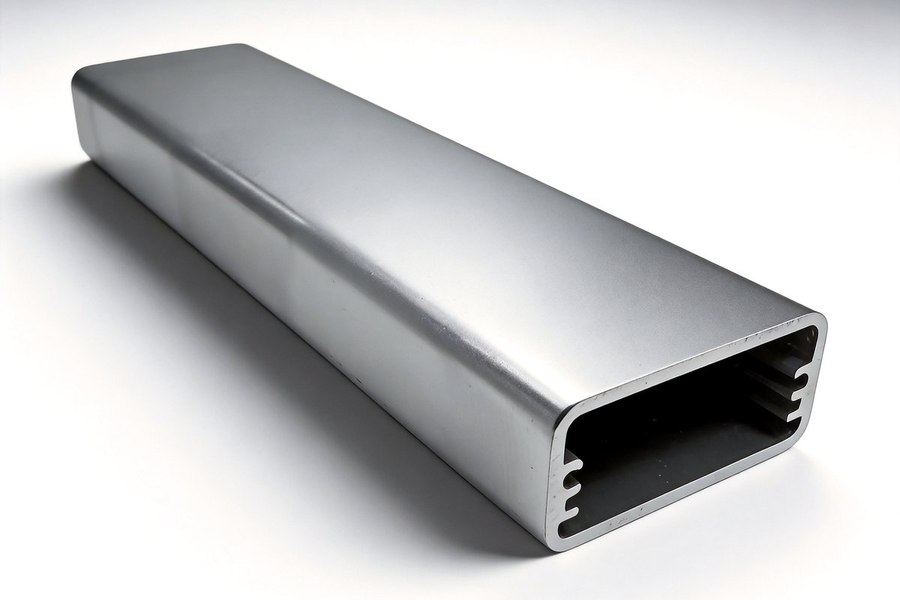
Automotive Electronics Enclosures
Vibration and temperature-cycled aluminium housings for on-board chargers, ECUs, display frames and auxiliary lighting —…
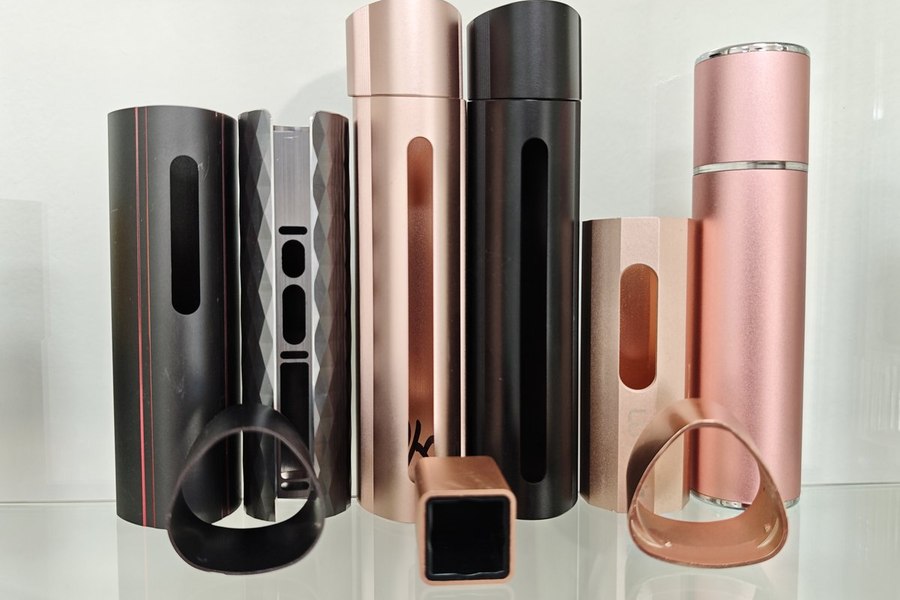
Medical & Beauty Device Enclosures
Cosmetic-grade aluminium housings for beauty instruments, hair styling tools and portable medical devices — polish-free 6063,…
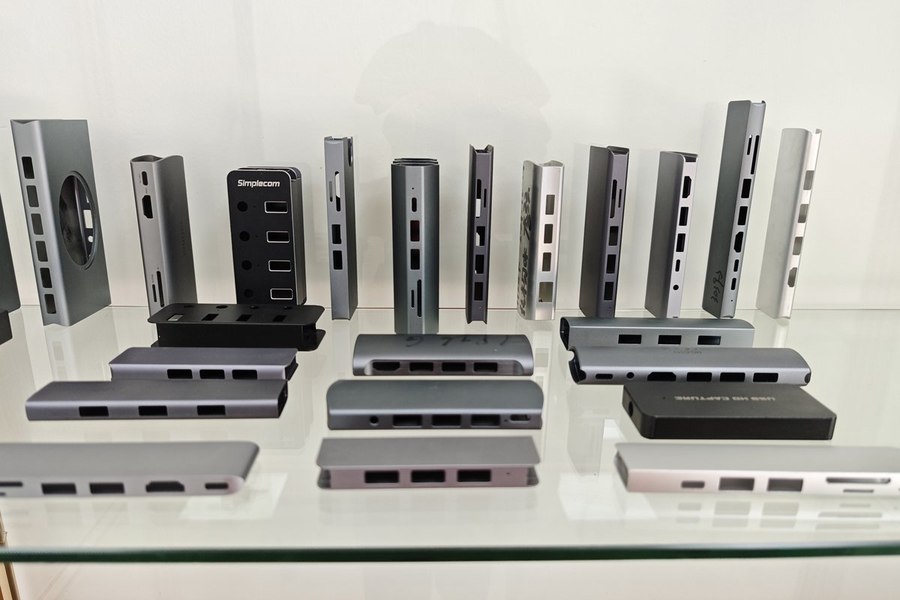
3C Consumer Electronics Enclosures
High-volume aluminium shells for external SSDs, docking stations, power banks and wireless chargers — ±0.005 mm cut-to-length…
Send your wattage, envelope and installation environment — we will propose a fin section and quote within one working day.