
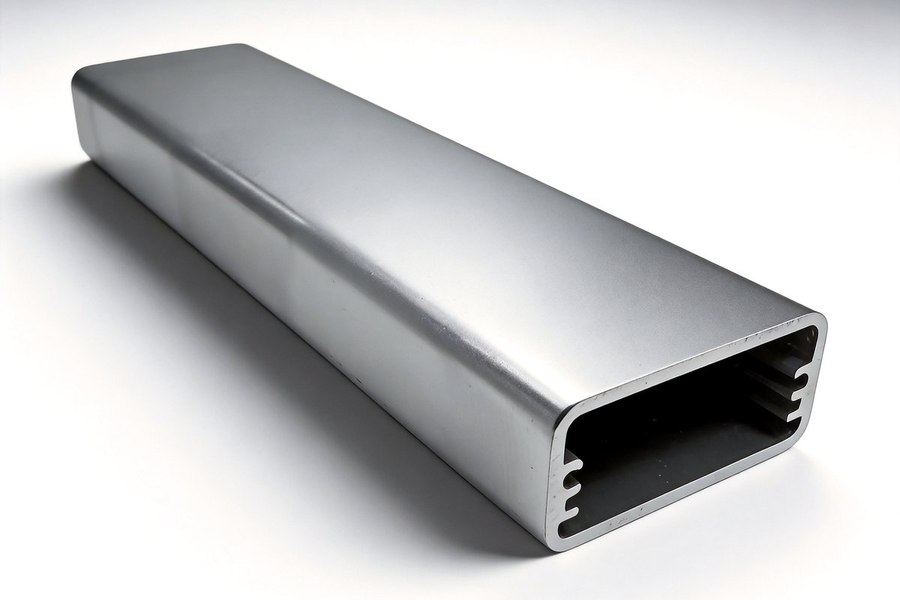
How thin can an aluminium enclosure wall go? Wall-thickness rules, stability limits and machining-rigidity tips for extruded profiles.
A thin wall is the fastest way to cut weight and material cost on an extruded enclosure — but only if the section stays stable on the press and rigid enough to machine. This is how we set the limit.
The headline number — and what it hides
We run 0.3 mm walls in stable volume production. That number is a result, not a target: the real limit depends on how wide the flat is, whether the section is hollow, and how the part is held during CNC machining. A narrow, supported wall can go thinner than a wide, open one.
Three rules we apply before cutting the die
- Keep thin walls short and supported — long, open flats bow on the press.
- Leave metal behind a thin wall where a hole or thread will be machined.
- Avoid sudden thickness steps; ramp them so the extrusion fills cleanly.
Machining rigidity is the hidden constraint
A wall can extrude fine yet deflect under a milling cutter, spoiling flatness or hole position. When we review your drawing we mark which walls can stay thin and where they need backing — often by integrating a rib rather than thickening the whole wall. That keeps weight down while holding ±0.05 mm on machined features.
Send the cross-section and we will tell you where the wall can go thin and where it still needs metal behind it. Open a DFM review.
Have a project in mind? Send your drawing and get a DFM review plus tooling quote within one working day.