
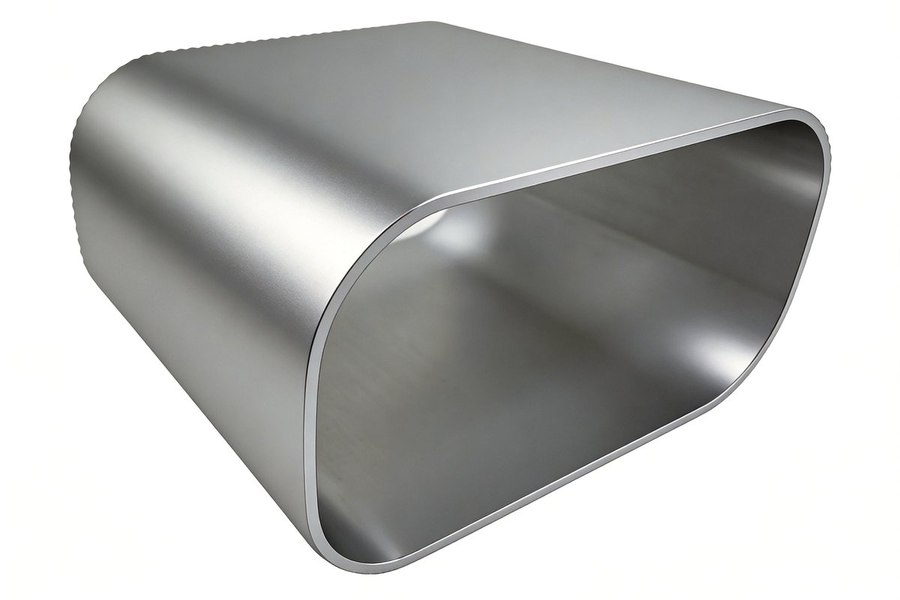
Extrusion vs CNC machining for custom enclosures — when each wins on cost, lead time, wall thickness and volume.
The single biggest cost lever on a custom aluminium enclosure is the choice between extruding a profile and machining it from solid bar. Both run on the same shop floor here, so we are not pushing one to fill a machine — we pick the route that fits your volume and geometry.
Extrusion wins on volume and wall thinness
Once the die is cut, an extrusion press turns out metres of consistent profile for a fraction of the per-part cost of machining. Extrusion also holds walls down to 0.3 mm that would be slow or impossible to mill. The trade-off is tooling lead time (4–5 days for a new die) and a fixed cross-section.
CNC machining wins on complexity and lead time
CNC machining needs no tooling. For prototypes, low volumes, or a shape that changes along its length, machining from solid bar is faster to first part and far more flexible. Our 30 CNC centres drill, tap, mill pockets and contour the extruded blank or solid stock to your drawing.
A simple decision table
| Factor | Favour extrusion | Favour CNC machining |
|---|---|---|
| Volume | Hundreds to millions of metres | Prototypes to low thousands |
| Wall thickness | 0.3 mm and below | Thicker, variable walls |
| First-part lead time | After tooling (4–5 days) | Immediate |
| Tooling cost | One-off die fee (waived at 2 t) | None |
How we actually run it
For a new programme we usually machine prototype quantities from solid bar so you can validate fit and finish with no tooling spend. Once the design is frozen and volume justifies it, we move you to extrusion — and if a single order reaches 2 tonnes, the tooling fee is waived entirely. See how this played out in our case studies.
Have a project in mind? Send your drawing and get a DFM review plus tooling quote within one working day.