
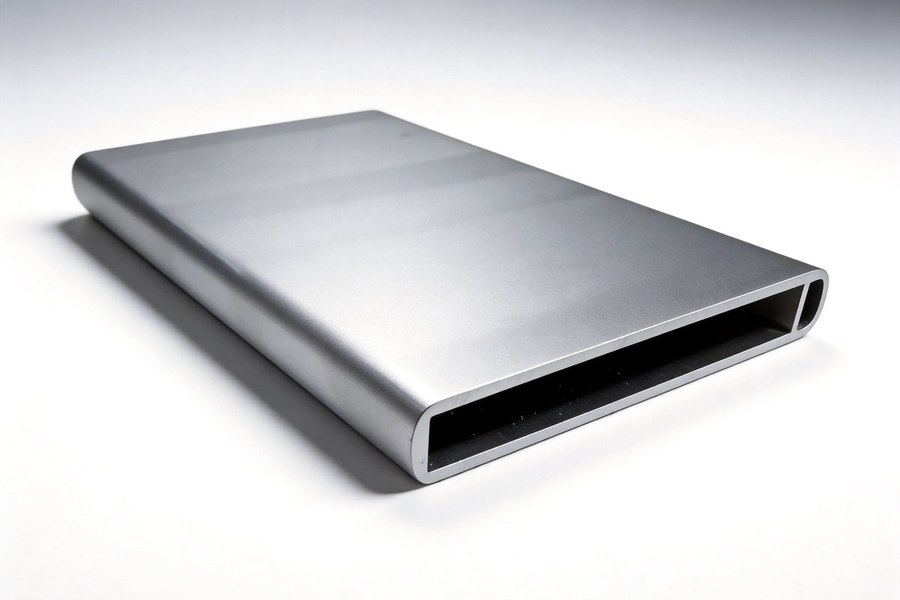
Anodizing or powder coating for your aluminium enclosure? Compare durability, colour, EMI and cost to pick the right finish.
Surface treatment is where an enclosure either looks like a precision product or like a painted box. Anodising and powder coating are the two finishes we apply most, and they are not interchangeable.
Anodising — the metal becomes the finish
Anodising grows an oxide layer from the aluminium itself, so it cannot chip or peel and it stays electrically tied to the substrate. It is the right call for heat-sink faces, cosmetic shells, and anywhere the finish must survive handling. Colour consistency starts at the billet: we run primary 6063, ceramic-filtered and homogenised, then check each batch with a spectrophotometer against your approved first article.
Powder coating — thick, coloured, insulating
Powder coating lays a thick polymer film that hides substrate imperfections and offers almost any colour, including matte and textured. It is an electrical insulator, so it is poor for thermal or shielding contact but excellent for indoor, coloured, or cost-driven housings.
Quick comparison
| Property | Anodising | Powder coating |
|---|---|---|
| Layer | Grown from metal, integral | Deposited polymer film |
| Chip / peel | Will not | Can if impacted |
| Thermal path | Conductive | Insulating |
| Colour range | Metallic / limited | Almost unlimited |
| Best use | Heat sinks, premium shells | Indoor, coloured, budget |
Still deciding? Our surface treatment FAQ lists every option we offer, including conductive oxidation for EMI.
Have a project in mind? Send your drawing and get a DFM review plus tooling quote within one working day.