
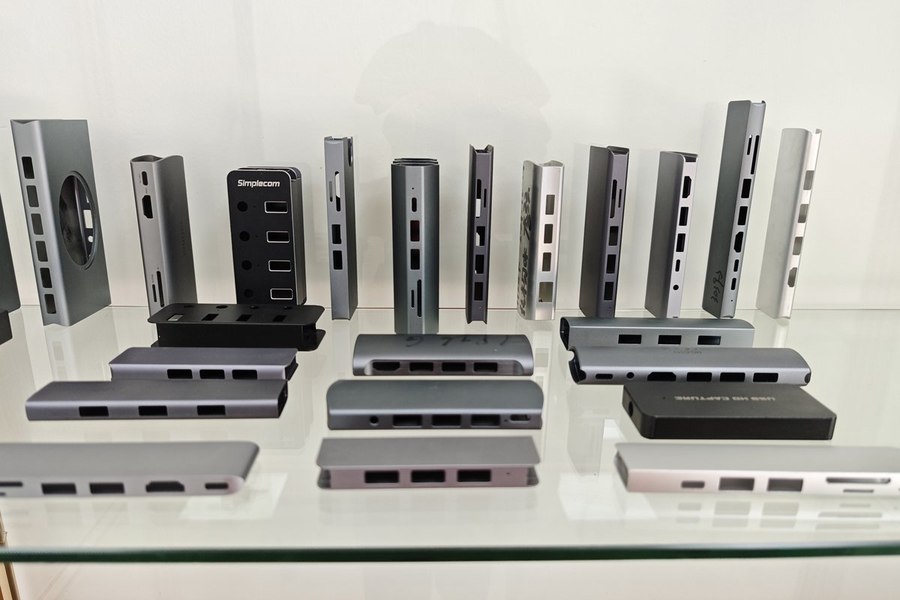
How to choose the right aluminium alloy for your enclosure — 6061, 6063, 6082 and 6005A compared on machinability, finish and strength.
Choosing the aluminium alloy for an enclosure is not a finish decision — it shapes how thin you can extrude the wall, how clean the anodised surface looks, and how much load the housing can carry. This guide compares the four grades we quote for enclosure work most often.
Read the alloy from the function, not the price
We do not silently swap grades to hit a number. The right alloy depends on three questions: does the housing carry load or threads? Does it need the finest anodised face? Does it need to shed heat? Answer those and the alloy usually chooses itself.
The four grades we specify most
| Alloy & temper | Best for | Watch out for |
|---|---|---|
| 6063-T5 / T6 | Enclosures where surface finish matters most — thin, complex sections, best anodising | Lower strength; not for heavily loaded brackets |
| 6061-T6 | Housings that carry load or take torqued threads | Slightly coarser anodised surface than 6063 |
| 6005A / 6082 | Structural sections, heavier walls, stiffer frames | Less fine finish; wider tolerances on thin walls |
| 6060-T6 | Wide, thin, multi-void profiles and heat-sink fins | Softer; avoid for threaded load paths |
Rule of thumb for most enclosure programmes
- Default to 6063-T5/T6 when the part is a cosmetic or thermally exposed enclosure.
- Move to 6061-T6 when a mount or thread takes real torque.
- Keep 6082 for structural members, not the outer shell.
- Always name the grade on the drawing — we match it, not approximate it.
Send us the drawing and target quantity and we will tell you honestly whether the grade you picked is the cheapest route that still meets the spec. Start a free DFM review.
Have a project in mind? Send your drawing and get a DFM review plus tooling quote within one working day.