
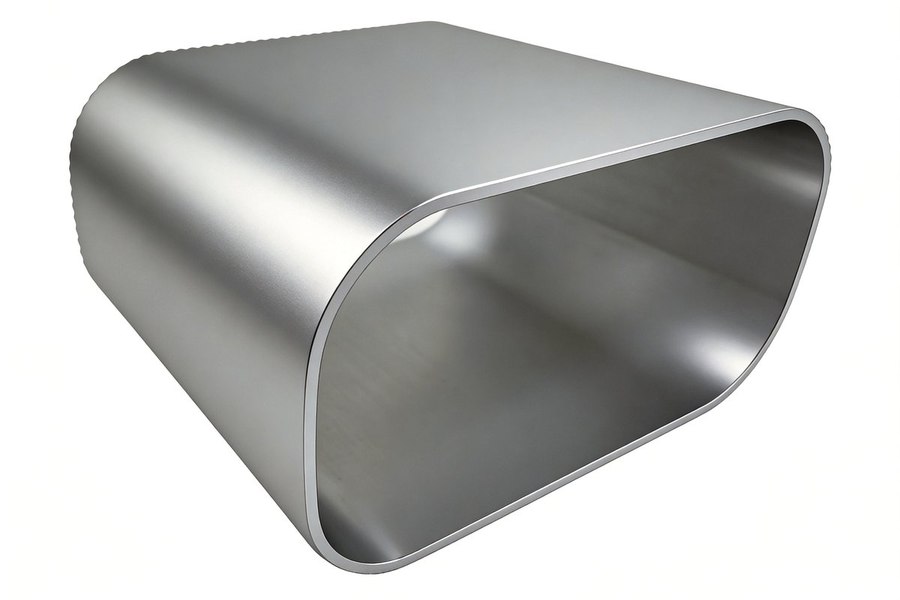
CNC machining usually dominates the piece price of a machined aluminium enclosure. Seven levers — tolerance, setups, tool changes, pocket depth, corner radius, near-net extrusion and batch size — move cost more than any hourly-rate negotiation.
CNC machining is usually the largest single line in the piece price of a machined aluminium enclosure. These seven levers are where the money is.
1. Relax non-critical tolerances to ±0.04 mm
Every dimension tighter than necessary buys inspection, not function. Our production standard is ±0.04 mm on ID/OD and ±0.02 mm on wall thickness; calling ±0.02 mm everywhere can add a setup and full inspection to every part.
2. Design for one setup
Features that need the part re-fixtured cost a second setup — often the biggest single saving available. If all machined faces can be reached from one or two orientations, cycle time and handling both drop.
3. Standardise hole sizes
Five different thread sizes means five tools and five tool changes. Standardising on two or three sizes across the housing removes tool changes from the cycle.
4. Shallow the pockets
Deep pockets force long-reach cutters, slower feeds and more passes. Where the function allows, halving pocket depth can cut the machining time on that feature substantially.
5. Use generous corner radii
Sharp internal corners require small-diameter cutters and slow feeds. A larger corner radius lets a bigger cutter run faster and leaves a stronger part.
6. Extrude near-net shape
Because the die is designed in-house, we put material where the part needs it and remove it where it does not, so the machines take less metal per part. This is the lever most buyers cannot access when machining and extrusion sit in different factories.
7. Batch the release
Machining in larger batches amortises setup and fixture time across more parts. We hold safety stock of your profile in a 3,000 m² warehouse and release machined batches on your call-off, so you get volume pricing without carrying finished inventory.
Quick answers
- Biggest lever: tolerance discipline, then setup count.
- Does near-net extrusion really help? Yes — less metal removed per part means shorter cycle time and less scrap.
- Do you charge for DFM review? No — feasibility review and optimisation before tooling are free.
- Can you quote each lever? Yes — send the drawing and we return the cost impact of each change.
Have a project in mind? Send your drawing and get a DFM review plus tooling quote within one working day.